8 August 2026
Why Your Face Ages the Way It Does
The fold that bothers you is rarely the thing that has changed. It is the shadow cast by something else. A structural look at facial ageing, and why filling the line you can see so often makes the face look heavier.
By Jennifer Lavery
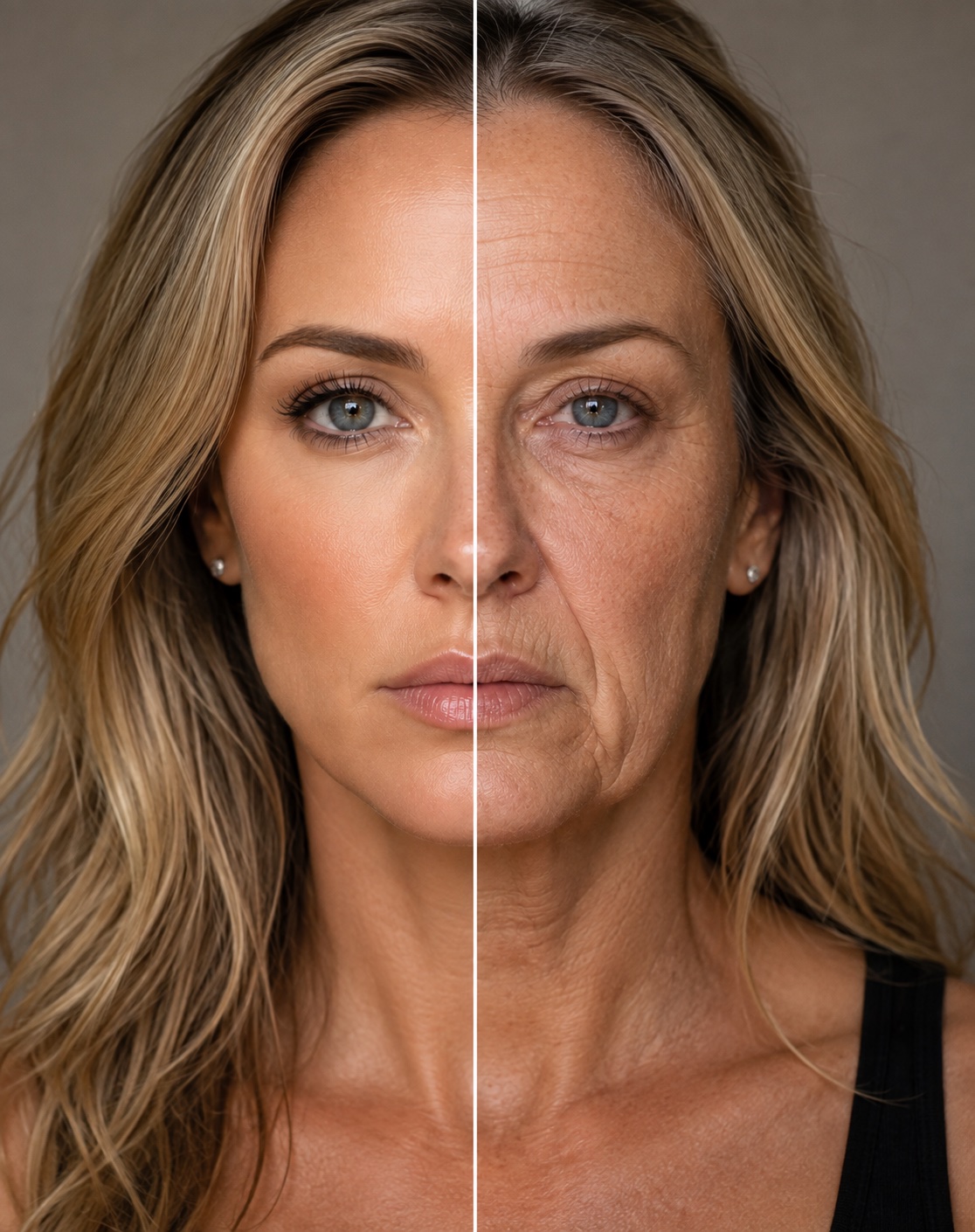
Most people can point to the exact thing that bothers them.
The fold that runs from nose to mouth. The hollow under the eye that makeup settles into. The jawline that used to be a line and is now a suggestion. The photograph from a friend's wedding where you looked tired, and you were not tired.
Here is the part that changes how you think about all of it. The thing you are pointing at is almost never the thing that has changed. It is the shadow cast by something else.
Your face is a structure, not a surface
There are four layers involved, and they age at different rates and in different directions.
Bone. The facial skeleton is not fixed. It remodels throughout life, and it loses volume. The eye socket widens, particularly at the outer and lower edges. The middle of the face, the maxilla, rotates backwards and loses projection. The jaw loses height and the angle softens. This is the foundation moving, and everything sitting on top of it moves too.
Ligaments. The face is anchored to the skeleton at specific points by retaining ligaments. These stay relatively fixed while the tissue around them descends. That is why the folds appear exactly where they appear. The nasolabial fold, the marionette line, the groove under the eye. They are not random creases. They are boundaries, and they become visible when the tissue above them drops and the tissue below does not.
Fat. Facial fat sits in defined compartments, superficial and deep, not as a single even layer. These do not shrink uniformly. Some deflate early, particularly in the midface and temples. Others persist or descend. The result is not a smaller face. It is a redistributed one. Volume leaves the upper and middle face and gathers lower down.
Skin. Collagen and elastin decline steadily from the mid twenties, accelerated by sun exposure, smoking, and hormonal change. Skin becomes thinner and less able to recoil, so it drapes over a shrinking framework rather than gripping it.
Put those together and you get the pattern that reads as ageing. Not lines appearing on a face that is otherwise unchanged. A face changing shape, with lines as the visible consequence.
The inverted triangle
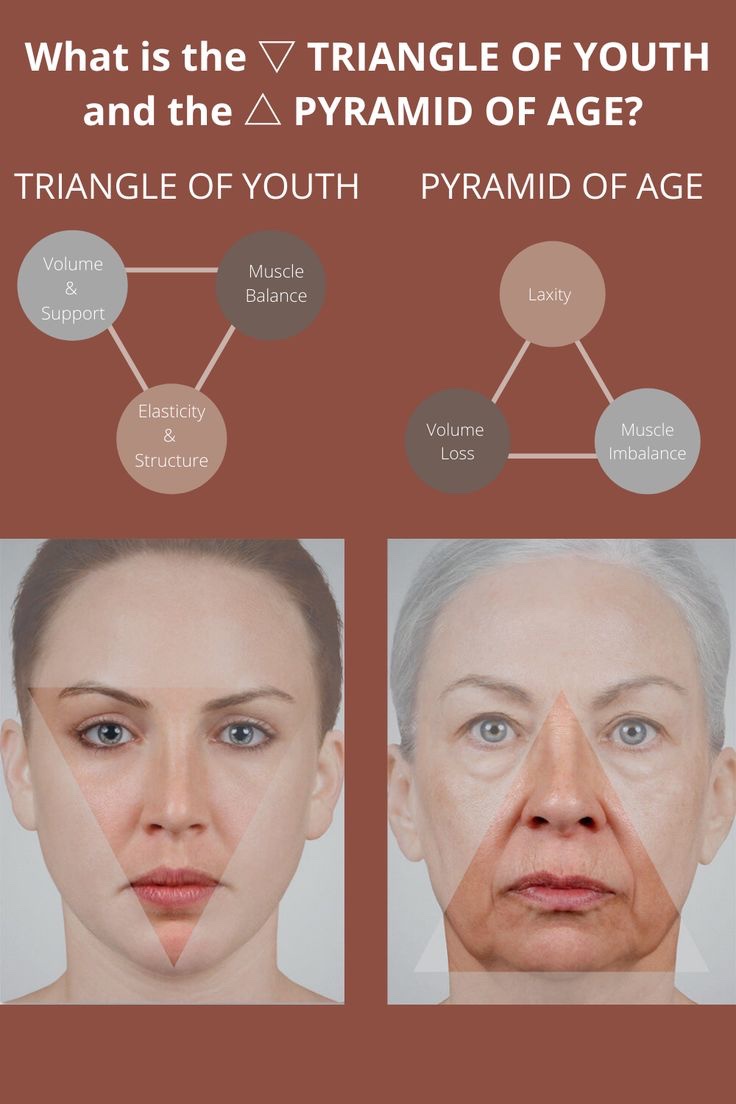
A youthful face is generally wider at the top and tapers toward the chin. Fullness sits high, across the cheekbones and the temples, and the lower face is comparatively narrow.
Over time that triangle inverts. The upper face narrows as temples hollow and the midface deflates. The lower face widens as tissue descends and settles along the jaw. The eyes look more set back. The mouth looks longer. The jawline blurs.
Nothing on your face has been added. It has moved.
Why filling the fold does not fix the fold
This is where treatment goes wrong, and it is the most common reason people end up unhappy with results.
Take the nasolabial fold. It is deep because the cheek above it has deflated and descended onto a fixed ligament. Inject filler directly into the fold and you have added volume to the lower edge of the problem. The shadow softens briefly. The face gets heavier in the exact area that was already carrying too much weight. Six months later the fold looks worse, so more goes in.
The same logic applies to the hollow under the eye. It is often not a hollow at all. It is the top of a cheek that has dropped, seen from above. Filling it directly, without addressing the support beneath, is why some under eye treatment ends up puffy or grey rather than corrected.
This is also the honest explanation for the look everyone recognises and nobody asks for. Overfilled faces are rarely the result of one heavy-handed appointment. They are the result of years of adding volume where the problem is visible rather than where the volume was actually lost. Each individual decision seemed reasonable. The cumulative effect is a face that no longer looks like a face.
What a structural assessment involves
The assessment is the treatment plan. Everything else is execution.
Looking at the whole face, not the complaint. The area you point to is information, not the diagnosis. It tells us where the consequence is showing.
Assessing at rest and in movement. Some concerns are static and structural. Others only appear when you talk, smile, or frown, and those need a completely different approach. Treating a dynamic problem with volume, or a structural problem with muscle relaxation, produces a poor result in both directions.
Reading light and shadow. The face is perceived through highlight and shadow. Correcting a shadow means restoring what used to reflect light, which is usually somewhere other than the shadow itself.
Proportion and asymmetry. Every face is asymmetric. The aim is not symmetry. It is balance, and knowing which asymmetries are original to you and which have developed.
Sequence. Structure before surface. There is an order to treatment, and doing things in the wrong order wastes both product and money. Restoring midface support first often means the fold you came in about needs very little direct attention, or none.
Knowing when the answer is not injectable. Sometimes the issue is skin quality, and no amount of volume will improve it. Sometimes it is loss of skin laxity beyond what non-surgical treatment can address, and the honest answer is to say so. Sometimes the correct plan is to do nothing yet and reassess in a year.
When should you start
There is no age. There is a point at which the structure has changed enough that restoring it produces a natural result, and that point differs from person to person by a decade or more.
What is worth saying is that structural treatment is easier and requires less intervention when it addresses early change rather than advanced change. Not because you should start young, but because restoring a small amount of lost support is a smaller job than rebuilding a foundation. The aim is maintenance of your own architecture, not transformation into someone else's.
How we work at Face and Co
Face and Co is built entirely around this approach. Facial architecture is not a tagline. It is the assessment method, and it is the reason our results tend to look like nothing happened.
Every first appointment is an assessment. We map the structural changes across your face, explain what is causing the specific thing that brought you in, and set out a plan in sequence with realistic expectations attached. We will tell you what is worth treating, what is not, and what would be better addressed another way.
We also teach this. Face and Co develops accredited training for other practitioners, which means the anatomy is not something we revisit occasionally. It is the daily work.
Consultations are available at our clinic on the Lisburn Road, Belfast.
Frequently asked questions
Why does my face look tired when I am not tired?
Usually because of volume loss in the midface and temples combined with descent of tissue onto fixed ligaments. This creates shadows under the eyes and around the mouth that the brain reads as fatigue. Addressing the underlying support usually improves this more effectively than treating the shadows directly.
Why do my nasolabial folds get worse after filler?
Because filler placed directly into the fold adds weight to an area that is already carrying descended tissue. The correction usually needs to happen higher in the face, restoring the cheek support that has been lost, rather than filling the crease itself.
Does dermal filler stretch your skin?
Appropriate volumes placed in the correct anatomical planes do not stretch skin. Repeated over-correction, particularly superficial placement of large volumes over many years, can contribute to tissue changes. This is an argument for a structural plan rather than an argument against treatment.
At what age should I start considering facial treatment?
There is no correct age. Structural change becomes measurable at different times for different people, and the right moment is when assessment shows change worth restoring. A consultation will tell you whether that point has arrived, including if the answer is not yet.
What is facial architecture?
It is the principle that the face should be assessed and treated as a structure of bone, ligament, fat, and skin, rather than as a set of individual lines and hollows. Treatment is planned to restore lost support in sequence, so that the visible concerns resolve as a consequence.
Book a facial assessment
If something in this article described your face, an assessment will tell you what is actually causing it and what is worth doing about it. No pressure to treat on the day.
Book at Face and Co, Lisburn Road
A note on this article. This is general information about facial anatomy and treatment planning. It is not individual advice. Suitability for any treatment can only be established at a consultation.