14 August 2026
Back to School, Back to You
September resets everything, and for the first time in weeks there is a little attention left over for you. How wrinkle relaxing treatment actually works, why it suits both younger and mature faces, and every treatable area explained. Five areas, £199.
By Jennifer Lavery
September resets everything. The uniforms are back on, the routine returns, and for the first time in weeks there is a little attention left over for you.
This is not a quick fix. It is an opportunity to start or continue considered, structural work on your face with a team who will tell you honestly what will help and what will not.
How it works
A purified protein is injected in very small amounts into specific muscles. It temporarily interrupts the signal from the nerve telling that muscle to contract. The muscle softens, the skin above it stops folding, and the line relaxes.
Changes begin around day three and settle fully by day fourteen. Most areas hold for three to four months, then movement returns completely. Nothing about it is permanent.
The result depends entirely on which muscles are treated, how much is used and where it is placed. Two faces with the same lines rarely need the same plan. That is why the assessment matters more than the treatment itself.
Starting early: the preventative case
Lines begin as dynamic creases, visible only when you move. What turns them into permanent lines is repetition. Fold the same piece of skin in the same direction several thousand times a year and it eventually holds that fold at rest.
Reducing that repetition early means less etching to correct later. Preventative work uses lower doses and aims to preserve your expression, not remove it. It is not right for every young face, and we will say so if yours does not need it yet.
Mature skin: balancing the pull
Established lines soften and shallow over time with consistent treatment, as the skin is finally given a chance to recover between folds.
There is a second, more structural benefit. Your face is a system of muscles pulling against each other. Relaxing the ones that pull downward allows the ones that lift to work unopposed. Done precisely, that can raise the brow slightly, open the eye area and lighten a heavy or downturned lower face. This is architectural work, balancing pull against pull.
The areas
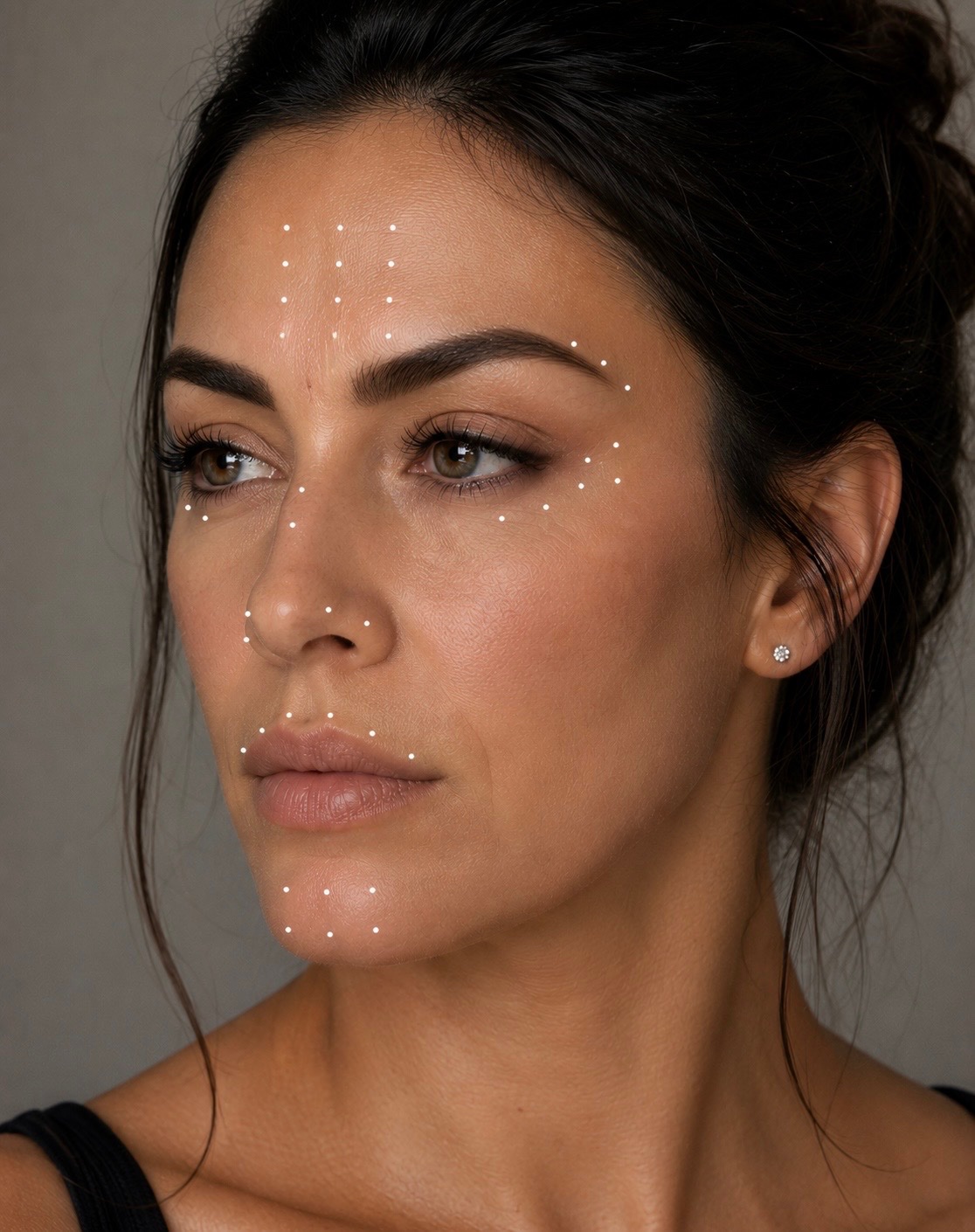
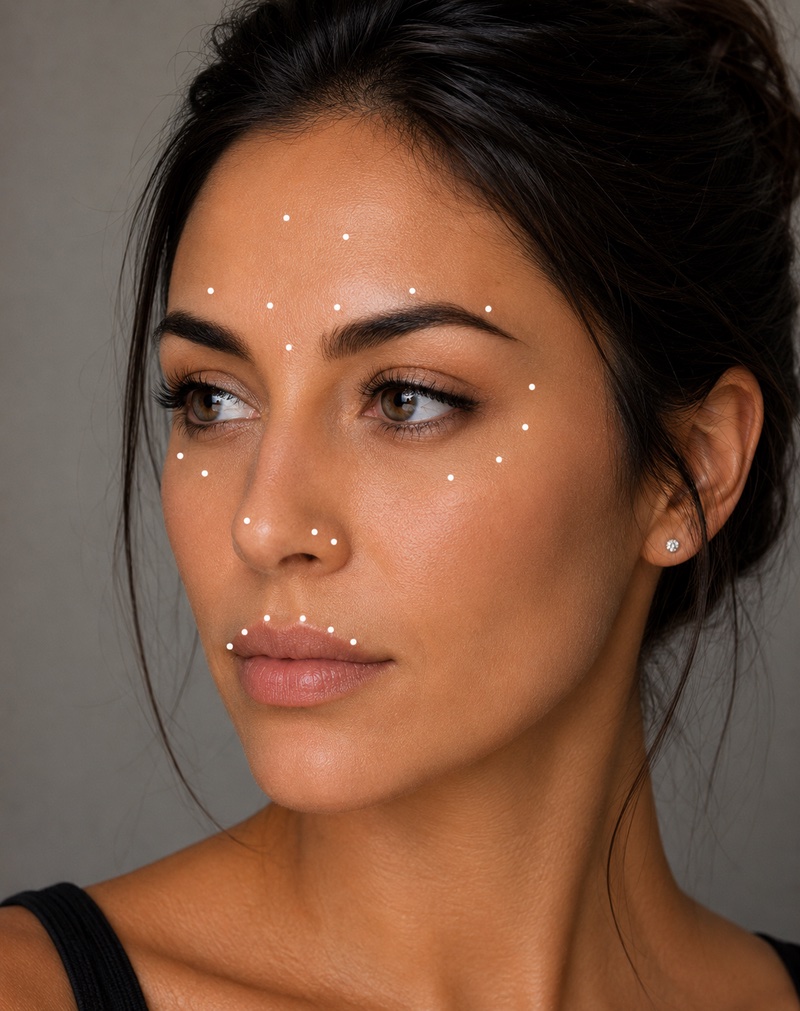
Each area corresponds to a specific muscle.
Frown lines, the elevens. The two vertical lines that form between the brows when you concentrate, squint or focus. Over time they hold at rest, which can leave you looking cross or worried when you feel neither. Softening this group is often the single change that makes a face read as calmer.
Forehead lines. The horizontal lines that appear when you raise your brows. This is the only muscle lifting your brow, so it is treated conservatively and almost always alongside the frown, never in isolation. Dosed carelessly it drops the brow. Dosed correctly it smooths the forehead while keeping it supported.
Crow's feet. The fan of fine lines radiating from the outer corner of the eye. Relaxing the outer portion freshens and opens the eye area while leaving enough movement for a smile that still reaches the eyes.
Bunny lines. The diagonal creases across the bridge of the nose when you scrunch or laugh. They frequently become more noticeable once the frown has been treated, as the surrounding muscles recruit harder. A small dose keeps the upper face balanced.
Nasal tip lift. A small muscle pulls the tip of the nose downward when you smile or speak. Relaxing it allows the tip to sit slightly higher and hold its position through animation, which reads as a more elegant profile without touching the structure of the nose.
Nostril flare. Some people flare noticeably when speaking, laughing or breathing in. Softening the flaring fibres calms that movement and keeps the base of the nose in better proportion with the rest of the face.
Chin dimpling, sometimes called pebble chin. An overactive chin muscle creates an orange peel texture and can push the lower lip upward into a pout at rest. Relaxing it smooths the chin surface and settles the lower lip into a more neutral position.
Downturned smile, the DAO. Paired muscles running from the mouth corners to the jawline pull the corners down, which can leave a resting expression looking stern or sad. Easing that downward pull lets the corners sit level and softens the whole lower face.
Lip flip. A very small dose along the upper lip border relaxes the muscle so the lip rolls slightly outward. It shows a little more of the lip you already have. No volume is added, and the effect is subtle and shorter lasting than the other areas.
Gummy smile. When the upper lip lifts very high on smiling, a band of gum shows above the teeth. Relaxing the lifting muscles reduces how far the lip travels, so the smile shows more lip and less gum while staying entirely your own.
Pricing
Five areas of your choice, £199.
For returning Face and Co clients, until 30 September. Your five areas are agreed at consultation, based on what suits your anatomy.
Consultation is essential
Every face is assessed individually before anything is agreed. We look at muscle strength, symmetry, brow position, how your face moves and what you actually want to change.
Not everyone is a suitable candidate, and some of the areas above will not be right for you specifically. We will tell you plainly. Treatment is only ever carried out following a full assessment and prescriber consultation.
Common questions
How long does it last? Most areas last three to four months. The lip flip is shorter, usually six to eight weeks, because the dose is deliberately small.
Will I look frozen? Not when it is dosed properly. The aim is to soften the movement that creases skin while leaving the expression that makes your face yours. We will talk through how much movement you want to keep.
Is it suitable in my twenties? It can be, if you already have dynamic lines starting to linger after the movement stops. That is exactly what the assessment is for.
Does it hurt? The needle is very fine and most clients describe a brief sharp scratch. Treatment takes around ten to fifteen minutes and you can return to your day straight afterwards.
How soon will I see results? First changes usually appear at day three to five, with the full effect settled by day fourteen. We review you at two weeks.
Book your consultation
Book below, or get in touch if you would like to talk anything through first. We are always happy to answer questions before you commit.
Face and Co, Lisburn Road, Belfast. Treatment following consultation and prescriber assessment.